Who am I?
I am a postdoctoral researcher at Wageningen University & Research within the Public Administration and Policy Group, working on sustainability transitions and food systems. My research examines how policy and institutional innovations can accelerate the protein transition across the Netherlands, Denmark, Belgium, and the European Union.
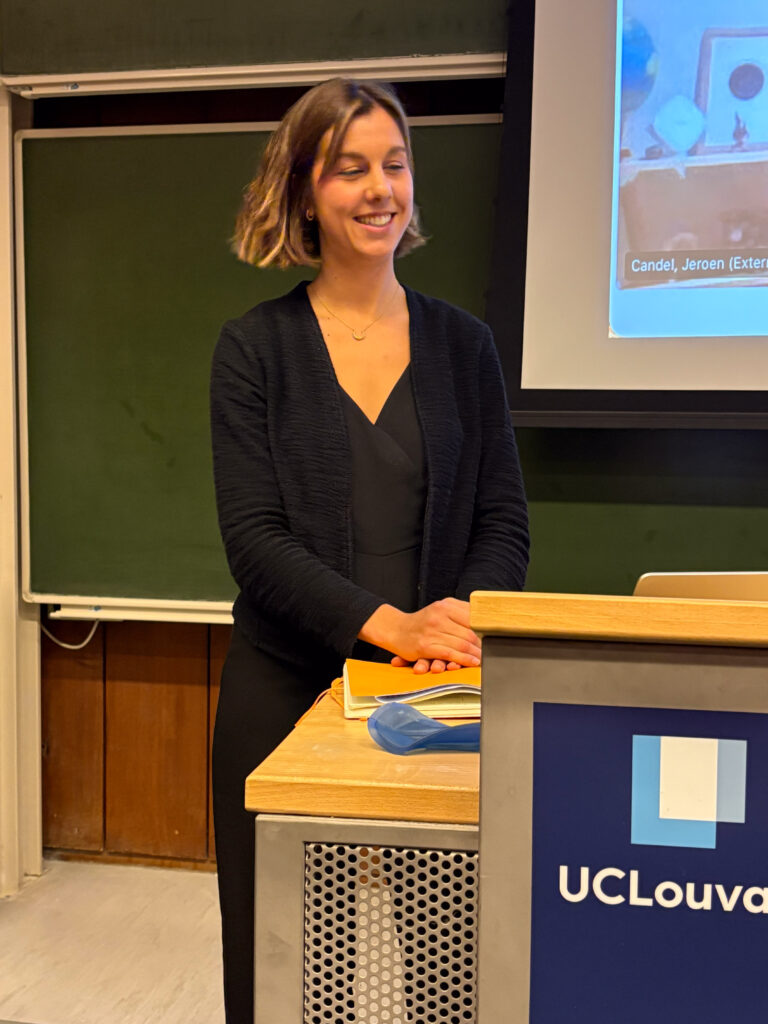
I completed my PhD at UCLouvain (Belgium) within the Sytra Team, where I explored the protein transition through an interdisciplinary lens, combining insights from environmental sciences, social sciences, and systems approaches.
My research is characterised by a strong engagement with complex sustainability challenges and a reflexive approach to knowledge production, with particular attention to epistemic diversity, researcher positionality, and the institutional conditions shaping interdisciplinary work. Throughout my doctoral journey, I have been actively involved in interdisciplinary research groups and collaborative projects, contributing to both empirical research and methodological reflection.
Beyond research, I engage in initiatives that foster dialogue across disciplines and between academia and society. As the initiator and coordinator of an edited volume on interdisciplinary doctoral trajectories, I bring together early-career researchers and supervisors to critically reflect on the lived realities of interdisciplinary research. More broadly, I am committed to supporting inclusive, reflective, and practice-oriented approaches to sustainability transitions.
Failures
I applied for two grants in the USA, the Fullbright and BAEF, but I didn’t get either.
During the interview, the jury kept circling back to the fact that I was a bioengineer, but I did not perform any lab work. So what did I do?
I’ve boxed twice in competition and lost both bouts, yet they were among the most intense experiences I’ve ever had. Being in the ring creates a feeling of life or death—just you and your opponent, each fully committed, each aiming for a knockout.
That experience has stayed with me. It reshaped how I relate to pressure and perspective: after facing that kind of intensity, the stress of a conference talk feels different—grounded, manageable, and never quite as overwhelming as stepping into the ring.
I applied to the WGS Postdoc Talent Programme 2025, but I was not selected for an interview. A total of 34 eligible proposals were submitted, of which 10 candidates were invited for interview and 4 ultimately received funding.
The evaluation committee highlighted several strengths in my application, noting my strong track record shortly after completing my PhD and the relevance of my research proposal on political and institutional pathways for accelerating the protein transition in the EU. They also indicated that I would be a good fit with the host group.
At the same time, the feedback pointed to areas for improvement. In particular, the proposed timeline was considered too ambitious for the two-year funding period, the level of innovation could have been more clearly articulated, and the proposal was perceived as somewhat straightforward. Additionally, the committee noted that future perspectives and opportunities were not sufficiently developed in the support letter.
Overall, while the proposal ranked relatively highly, these elements limited its progression to the interview stage.